Contents
- 0.1 The Real Reason SEMrush Stands Out
- 0.2 Keyword Research That Goes Deeper Than Volume Numbers
- 0.3 The Competitor Analysis Angle — Where It Gets Genuinely Useful
- 0.4 Site Audit — More Useful Than People Expect
- 0.5 Position Tracking That’s Actually Reliable
- 0.6 Backlink Analysis — Not Just Numbers
- 0.7 Where It Falls Short (Honestly)
- 0.8 SEMrush Plans — What You Actually Get
- 0.9 Add-Ons Worth Knowing About
- 0.10 How It Compares
- 0.11 So — Is SEMrush Actually Worth It?
- 1 Everything You Need About Semrush Free Trial
- 1.1 Start Semrush Free Trial
- 1.2 How to Get Free Trial
- 1.3 How to Cancel Trial
- 1.4 Semrush SEO Free Trial
- 1.5 Frequently Asked Questions
- 1.6 Why is SEMrush good for competitor analysis?
- 1.7 Is SEMrush worth the price for intermediate SEOs?
- 1.8 What’s the difference between SEMrush Pro and Guru?
- 1.9 Can I use SEMrush for free?
- 1.10 How accurate is SEMrush’s keyword data?
- 1.11 Is SEMrush better than Ahrefs?
- 1.12 What add-ons does SEMrush offer?
- 2 Best Semrush Alternatives to Consider
Most people land on SEMrush’s pricing page, see $139.95/mo, and immediately close the tab.
Understandable. That’s not a small number.
But here’s the thing — I’ve been using SEMrush for over five years now, across client projects, niche sites, and agency work. And the question I get asked constantly is: why is SEMrush good when cheaper tools exist?
Fair question. Let me actually answer it — not with a feature list dump, but with real context.
Quick Answer
SEMrush is good because it combines keyword research, competitor analysis, site auditing, backlink tracking, and content tools inside one platform — with data depth that most standalone tools can’t match. For intermediate to advanced SEOs managing multiple projects, it eliminates the need for 4–5 separate subscriptions.
The Real Reason SEMrush Stands Out
A lot of SEO tools do one thing well. Screaming Frog audits. Ahrefs does backlinks. Google Keyword Planner gives search volumes. You end up paying for three tools, switching between dashboards, and still missing the full picture.
SEMrush’s actual strength isn’t any single feature — it’s the connection between features.
When you’re analyzing why a competitor is outranking you, you can go from their domain overview → their top pages → the exact keywords driving traffic → their backlink sources → their ad strategy. All inside one workflow, without exporting CSVs and cross-referencing spreadsheets.
That’s the thing most reviews don’t explain properly.
Keyword Research That Goes Deeper Than Volume Numbers
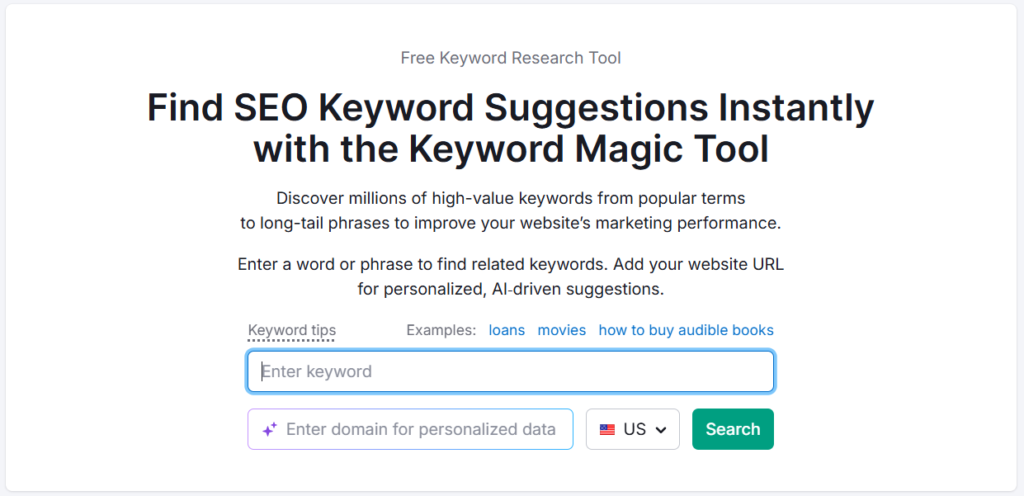
The Keyword Magic Tool isn’t just a volume checker. It currently holds one of the largest keyword databases available — and more importantly, it shows why a keyword is competitive, not just that it’s competitive.
You get keyword difficulty scores, intent classification (informational, commercial, transactional), CPC data, and SERP feature presence — all on the same screen.
For intermediate SEOs, the Questions filter is underrated. It pulls actual question-based queries that map directly to featured snippet opportunities and FAQ sections. I’ve built entire content clusters from a single seed keyword using this filter alone.
One thing worth noting: on the Pro plan, you get 250 keyword metric updates per month. Guru bumps that to 1,000, and Business goes up to 5,000. If you’re tracking large-scale keyword portfolios, that gap matters.
The Competitor Analysis Angle — Where It Gets Genuinely Useful
Here’s where SEMrush earns its price tag for me personally.
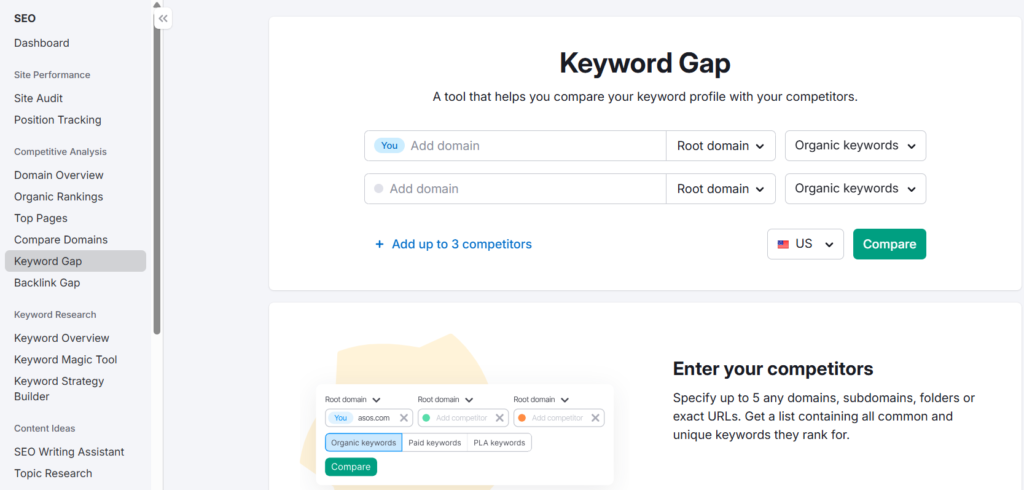
A few years back, I was working on a content site in a competitive niche. Rankings were stagnant. The site had decent content but wasn’t breaking through. I ran a Keyword Gap analysis — comparing our domain against three competitors.
The result: 150+ keywords that competitors were ranking for that we weren’t targeting at all. Not obscure long-tails either — actual mid-volume terms with real traffic potential.
We built content around those gaps systematically. Four months later, rankings started coming in across the board. That one session inside SEMrush’s Keyword Gap tool changed the entire content strategy.
That kind of analysis isn’t possible with most budget tools — at least not with the same accuracy.
Site Audit — More Useful Than People Expect
Most people treat site audits as a one-time thing. Run it, fix issues, forget about it.
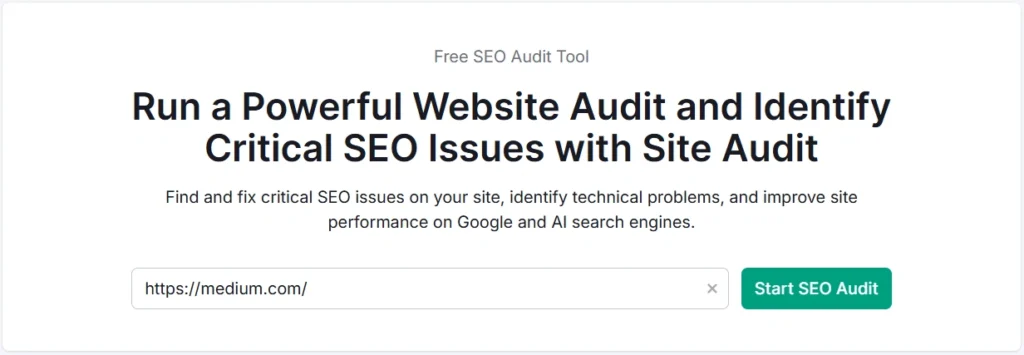
SEMrush’s Site Audit is built for ongoing monitoring. The Pro plan crawls 100,000 pages per month (20,000 per site), Guru goes to 300,000, and Business hits 1,000,000. For agencies managing multiple client sites, those numbers matter significantly.
The audit flags technical issues with clear severity labels — errors, warnings, notices — and explains why each issue matters for SEO. It doesn’t just say “fix your broken links.” It tells you what pages are affected, what the crawl impact is, and what to prioritize first.
Guru and Business plans also unlock JavaScript rendering in Site Audit — critical if you’re working with React or Vue-based sites that rely on client-side rendering.
Position Tracking That’s Actually Reliable
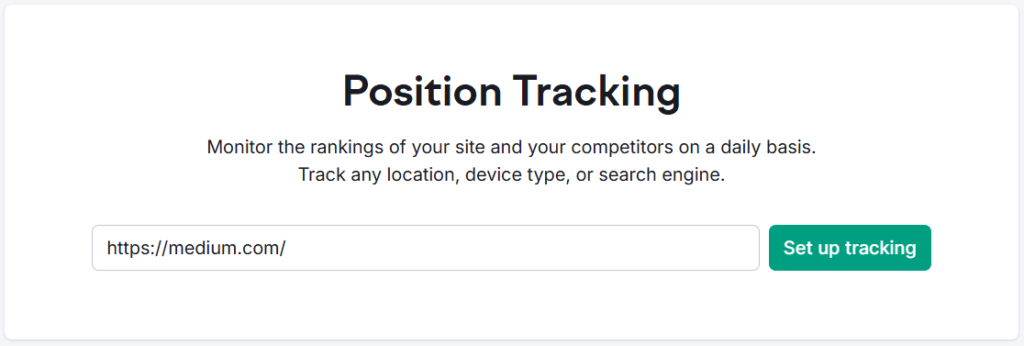
Daily rank tracking sounds basic until you realize how badly some tools mess it up.
SEMrush’s Position Tracking updates daily and supports tracking by device (desktop/mobile) and location — useful if you’re doing local SEO or targeting multiple regions.
- Pro: 500 keywords to track, 1 target per monitored website
- Guru: 1,500 keywords, 10 targets per site
- Business: 5,000 keywords, unlimited targets
The Keyword Cannibalization report (available on Guru and Business) is something I wish more people used. It flags when multiple pages on your site are competing for the same keyword — a silent traffic killer that’s surprisingly common on older sites.
Backlink Analysis — Not Just Numbers
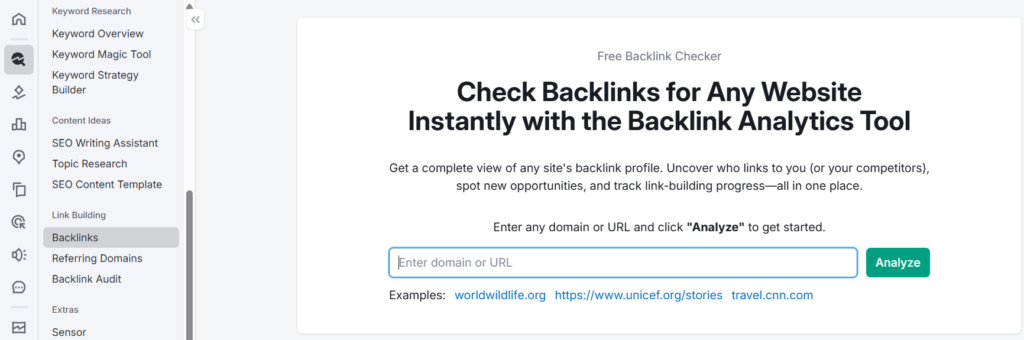
SEMrush’s Backlink Analytics has improved considerably. It shows referring domains, authority scores, anchor text distribution, and link types — but what’s more useful is the Backlink Gap tool.
Similar to Keyword Gap, it lets you compare your backlink profile against competitors and find sites linking to them but not you. Combined with the keyword gap workflow, it creates a complete picture of exactly where you’re losing ground.
If you’ve been wondering how competitors keep outranking you despite similar content quality — backlink gap analysis usually reveals the answer within 10 minutes.
Where It Falls Short (Honestly)
No tool is perfect. A few things worth knowing:
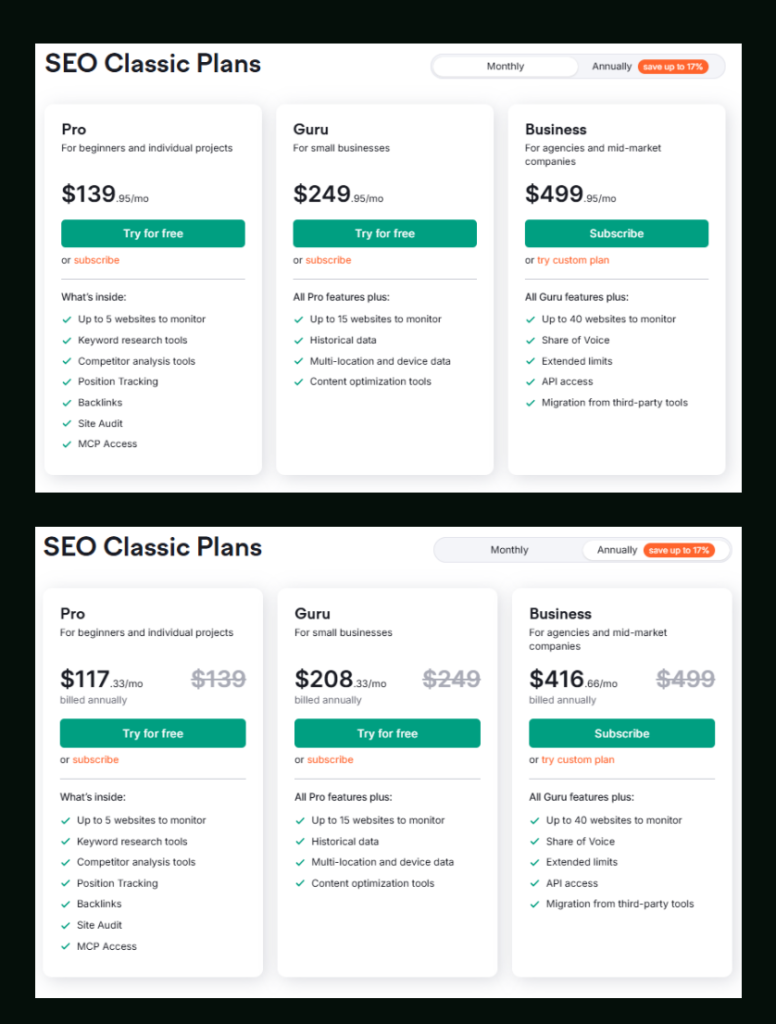
Price. $139.95/mo on monthly billing is genuinely expensive for solo bloggers or beginners. The annual pricing brings Pro down to $117.33/mo, Guru to $208.33/mo, and Business to $416.66/mo — better, but still a significant investment.
Beginner learning curve. The platform has a lot of features. New users often feel overwhelmed in the first few weeks. It takes time to know which tools to use for which situation.
Pro plan limitations. No historical data, no Looker Studio integration, no JavaScript rendering in Site Audit. If you need those features regularly, you’re looking at Guru ($208.33/mo annually).
If budget is a concern, it’s worth knowing you can try SEMrush free for 7 days before committing — both Pro and Guru plans have a free trial available.
SEMrush Plans — What You Actually Get
| Feature | Pro | Guru | Business |
|---|---|---|---|
| Monthly Price (Annual) | $117.33/mo | $208.33/mo | $416.66/mo |
| Monthly Price (Monthly) | $139.95/mo | $249.95/mo | $499.95/mo |
| Keywords to Track | 500 | 1,500 | 5,000 |
| Sites to Monitor | 5 | 15 | 40 |
| Pages to Crawl/Month | 100,000 | 300,000 | 1,000,000 |
| Historical Data | ✗ | ✓ | ✓ |
| JavaScript Rendering | ✗ | ✓ | ✓ |
| Looker Studio Integration | ✗ | ✓ | ✓ |
| Share of Voice Tracking | ✗ | ✗ | ✓ |
| Results per Report | 10,000 | 30,000 | 50,000 |
Not sure which plan fits your workflow? The SEMrush Pro vs Guru breakdown covers the key differences in detail.
Add-Ons Worth Knowing About
Beyond the core plans, SEMrush offers add-ons if you need specific capabilities:
- Additional Users — Starting at $45/mo (useful for agency teams)
- Lead Generation — $90/mo (includes Semrush Agency Partners profile + 1,000 Lead Finder credits)
- Base Report — $10/mo (automated reports pulling from 20+ tools, with Google Analytics and Search Console integration)
- Pro Report — $20/mo (everything in Base + white-labeling, AI summaries, external integrations)
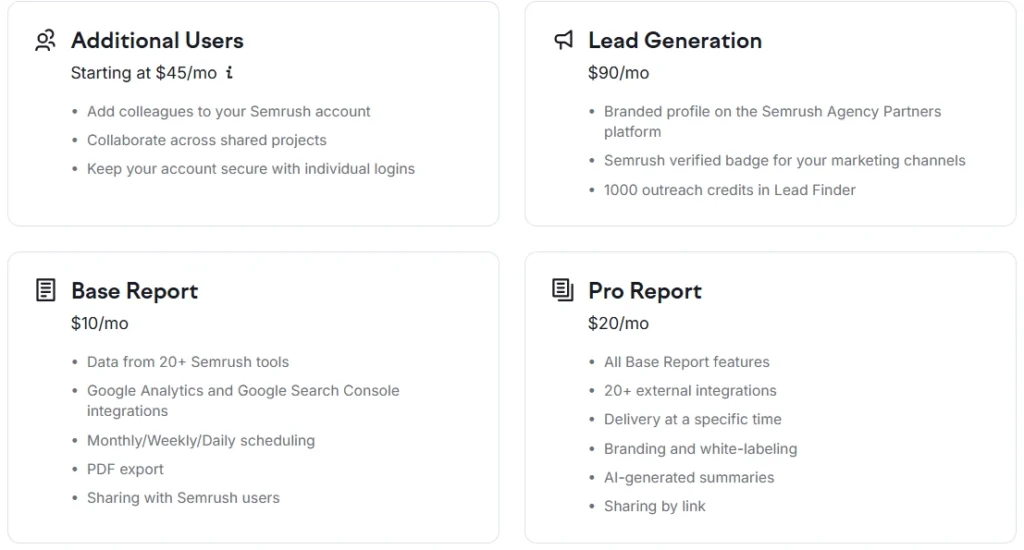
The Pro Report add-on is underrated for agencies — white-labeled, AI-summarized reports delivered on schedule saves a meaningful amount of time each month.
How It Compares
SEMrush vs Ahrefs is the most common comparison. Ahrefs has a stronger backlink database historically, but SEMrush covers more ground — PPC data, content tools, social tracking, local SEO — all in one place. For agencies or marketers who need breadth, SEMrush usually wins. For pure link analysis focus, Ahrefs is competitive.
Budget alternatives like Mangools or Ubersuggest exist and work for basic keyword research. But they don’t offer the depth of competitor analysis, site auditing at scale, or the workflow integration that makes SEMrush genuinely time-saving.
A detailed SEMrush vs Ahrefs comparison is available if you want a full breakdown.
So — Is SEMrush Actually Worth It?
For intermediate to advanced SEOs, content strategists, and digital marketing agencies: yes, consistently.
The value isn’t in any single feature. It’s in being able to move from research → analysis → action → tracking inside one platform, without losing context between tools.
After five years, the workflow efficiency alone justifies the subscription for any serious SEO work. The Keyword Gap discovery I mentioned earlier? That one campaign generated more ROI than the annual subscription cost many times over.
The 7-day free trial on Pro and Guru plans makes it a no-risk test. Start your free trial here and run a Keyword Gap analysis on your top competitor — the results usually speak for themselves.
Everything You Need About Semrush Free Trial
Activate your Semrush free trial directly, read our step-by-step guide on how to get it, or learn how to cancel before getting charged — all in one place.
Start Semrush Free Trial
Get full Pro access for 7 days — keyword research, site audit, backlink analysis & competitor research. No charge until after the trial ends.
Start Free Trial →How to Get Free Trial
Step-by-step guide to activate your Semrush free trial — what you unlock, how to use it right, and how to get maximum value in 7 days.
Read Full Guide →How to Cancel Trial
Don’t get charged by mistake. Step-by-step guide to cancel your Semrush trial before the billing date — timing tips included.
Read Cancel Guide →
Semrush SEO Free Trial
Get full Pro access for 7 days — keyword research, site audit, backlink analysis & competitor research. No charge until after the trial ends.
Start Your Semrush 7-Day Free Trial →Frequently Asked Questions
Why is SEMrush good for competitor analysis?
SEMrush’s Keyword Gap and Backlink Gap tools let you directly compare your domain against competitors to find traffic opportunities you’re missing. In practice, a single Keyword Gap session can surface 100+ untapped keyword opportunities — far more efficiently than manual research. It’s one of the most actionable competitor analysis workflows available in any SEO tool.
Is SEMrush worth the price for intermediate SEOs?
Generally yes — especially if you’re managing more than one project. The Pro plan at $117.33/mo (billed annually) covers keyword research, position tracking for 500 keywords, site auditing up to 100,000 pages/month, and competitor analysis. For someone actively growing sites or managing client work, the data quality and time saved typically justify the cost within the first month.
What’s the difference between SEMrush Pro and Guru?
The biggest differences are historical data access, JavaScript rendering in Site Audit, Looker Studio integration, and keyword tracking limits (500 on Pro vs 1,500 on Guru). Guru also allows monitoring up to 15 websites versus Pro’s 5. For agencies or anyone needing historical trend data, Guru is the more practical choice. See the full SEMrush Pro vs Guru breakdown for details.
Can I use SEMrush for free?
Yes — both the Pro and Guru plans offer a 7-day free trial. There’s also a limited free version that allows a set number of daily queries without a subscription. For a full guide on accessing SEMrush without paying, the how to use SEMrush for free page covers your options.
How accurate is SEMrush’s keyword data?
SEMrush pulls from one of the largest keyword databases available. Volume estimates are directionally accurate for most markets — meaning they’re reliable enough for prioritization decisions. For very low-volume or hyperlocal keywords, cross-referencing with Google Search Console data is still recommended. Over five years of use, the keyword difficulty scores have proven especially reliable for predicting ranking effort.
Is SEMrush better than Ahrefs?
Depends on your use case. Ahrefs has historically been stronger for pure backlink analysis. SEMrush covers more ground — PPC research, content optimization tools, local SEO, social tracking — making it more versatile for full-service digital marketers. For keyword research and competitor analysis specifically, both are excellent. A detailed SEMrush vs Ahrefs comparison breaks down the differences by use case.
What add-ons does SEMrush offer?
SEMrush offers four main add-ons: Additional Users (from $45/mo), Lead Generation ($90/mo), Base Report ($10/mo), and Pro Report ($20/mo). The reporting add-ons are particularly useful for agencies managing multiple clients who need automated, scheduled, white-labeled reports.
Article by Karan Rajput — SEO specialist and web developer with 5+ years of hands-on SEMrush experience across niche sites and client projects.
Best Semrush Alternatives to Consider
If Semrush’s pricing feels steep after the trial, these three tools cover most of what you need at a lower price point — SE Ranking, Mangools, and Ubersuggest all offer free trials too.
SE Ranking
More affordable entry pricing, solid rank tracking and audit features. Good for small agencies and freelancers who don’t need Semrush’s full data depth.
Try SE Ranking →Mangools
Beginner-friendly, clean UI, strong keyword and SERP tools at a much lower price point. Perfect for solo bloggers who need keyword research without the complexity.
Try Mangools →Ubersuggest
Neil Patel’s SEO Tool — keyword research, site audit, and competitor analysis at a very affordable price. Great for beginners and small business owners on a tight budget.
Try Ubersuggest →