Contents
- 1 Start With the Keyword Gap — Not Keyword Research
- 2 The Keyword Magic Tool — How to Use It Without Wasting Time
- 3 Fix What You Already Have Before Publishing More
- 4 Position Tracking: The Growth Signal Most Bloggers Ignore
- 5 Backlink Analysis — Targeted Link Building, Not Guesswork
- 6 Topic Research for Content Ideas That Actually Have Demand
- 7 Traffic Analytics — Understanding Where Your Competitors’ Readers Come From
- 8 What It Costs — Current Pricing
- 9 Everything You Need About Semrush Free Trial
- 10 Frequently Asked Questions
- 10.1 How can I quickly grow my blog traffic with SEMrush as a beginner?
- 10.2 Is SEMrush worth it for a small blog?
- 10.3 What SEMrush feature helps the most with blog traffic?
- 10.4 Can I use SEMrush to find blog post ideas?
- 10.5 How does SEMrush help with keyword research for blogs?
- 10.6 Does SEMrush help with content optimization?
- 10.7 How long does it take to see results using SEMrush for blog traffic?
- 11 All Semrush Toolkits — Quick Overview
Most bloggers use SEMrush like a keyword lookup tool — type a keyword, check the volume, move on. That’s fine, but it barely scratches the surface of what the platform can actually do for your traffic.
Here’s the thing: the bloggers who see consistent month-over-month growth aren’t running random keyword searches. They’re using SEMrush as an end-to-end content intelligence system — from finding the right topics to fixing what’s already broken on their site.
I’ve been using SEMrush for over five years across my own blogs and client projects. This is the actual workflow that moves the needle.
Quick Answer: To quickly grow blog traffic with SEMrush, focus on three things: find low-competition keywords using the Keyword Magic Tool, identify content gaps by running a Keyword Gap analysis against your competitors, and use Position Tracking to monitor and react to ranking changes. Pair that with a regular Site Audit to fix technical issues, dragging your existing content down.
Start With the Keyword Gap — Not Keyword Research
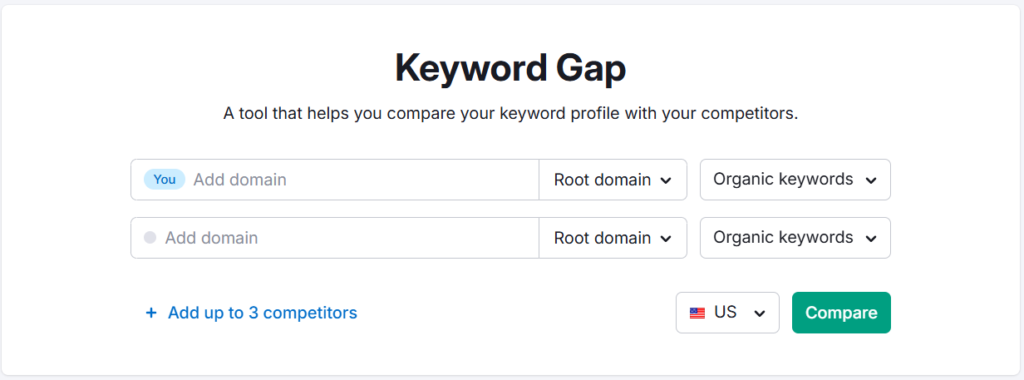
Most people open SEMrush and head straight to Keyword Magic Tool. Nothing wrong with that, but the faster route to traffic growth is the Keyword Gap tool.
Here’s why it works: instead of guessing what to write, you’re looking at keywords your competitors are already ranking for — keywords that you’re missing entirely.
How to run it:
- Go to Competitive Research → Keyword Gap
- Enter your domain and up to four competitor domains
- Filter by “Missing” — these are keywords your competitors rank for, but you don’t
What you’re left with is a prioritized list of content opportunities based on proven demand. Someone is already ranking for those terms. You just need a better piece of content.
In my experience running this across client blogs, it’s common to surface 200–500 legitimate keyword opportunities in a single session — topics the site had never covered, despite being in the space for years.
Pro Observation: Don’t just target the highest-volume keywords from this list. Sort by keyword difficulty under 40 and filter for informational intent. Those are the fast wins — especially for blogs that don’t have massive domain authority yet.
The Keyword Magic Tool — How to Use It Without Wasting Time

Once you’ve identified your gap opportunities, the Keyword Magic Tool helps you build out the right variations for each topic.
The mistake most bloggers make here is targeting head keywords immediately. A post titled “content marketing” is not going to rank for a new blog. What will rank is something like “content marketing for SaaS startups with no budget” — specific, long-tail, and aligned with a real user query.
Inside the tool:
- Use the “Questions” filter to find how people actually ask about a topic
- Use the “Broad Match” view to uncover semantic variations worth covering in one post
- Check the SERP Features column — if a keyword shows a Featured Snippet opportunity, that’s worth prioritizing
One filter that gets overlooked: Intent. Set it to “Informational” when building content calendars. Informational keywords bring early-funnel readers who can be converted later — they’re the backbone of sustainable blog traffic.
If you’re on the SEO Classic Pro or Guru plan, you get access to 500 to 1,500 keyword metric updates per month and up to 30,000 results per keyword report on Guru — enough depth for serious content planning across multiple topics simultaneously.
Fix What You Already Have Before Publishing More

This is the part nobody talks about enough. Before you write ten new posts, run a Site Audit.
Blogging creates technical debt over time — broken internal links, slow pages, missing meta descriptions, duplicate content, crawlability issues. These problems suppress your existing content’s rankings, which means all the work you’ve already done isn’t performing at its ceiling.
In SEMrush, go to Site Audit and set up a project for your domain. Let it crawl. Then work through the issues in order of priority:
- Errors (red) — fix these first. Broken pages, redirect chains, missing canonical tags
- Warnings (orange) — fix these next. Thin content flags, duplicate meta descriptions, and missing alt text
- Notices (blue) — review and decide
On the SEO Classic Pro plan, you get up to 100,000 pages crawled per month. That’s more than sufficient for most individual blogs. Guru bumps that to 300,000.
Most people who run their first Site Audit find 40–100 actionable issues on a blog they thought was healthy. Fixing those issues alone — without publishing a single new post — can move existing rankings noticeably within weeks.
Position Tracking: The Growth Signal Most Bloggers Ignore
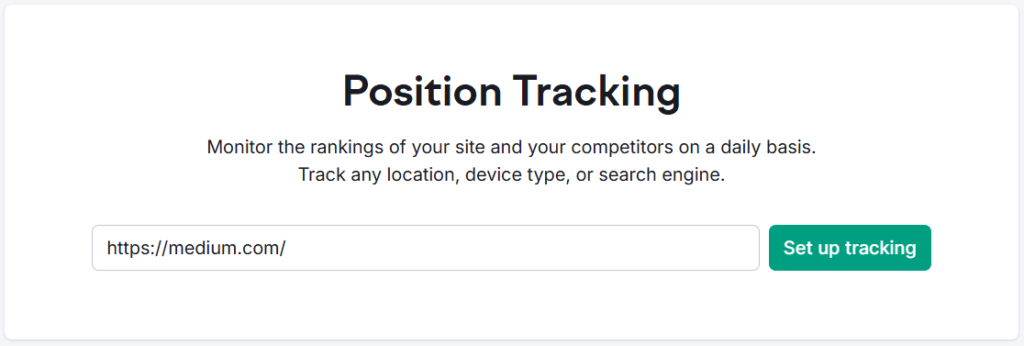
Here’s what most bloggers don’t realize: you don’t need to write more content to grow traffic. Sometimes you need to identify posts that are ranking on page two or three — and push them to page one.
That’s exactly what Position Tracking shows you.
Set up a project in SEMrush, add your target keywords, and check back weekly. Look specifically for keywords where you’re ranking in positions 8–20. These are your “almost there” posts — they have traction, Google already considers them relevant, and a targeted content improvement or a few backlinks could push them into top-five territory.
This is where I focus the majority of my optimization effort with client blogs. Publishing new posts gives you the chance to rank. Improving posts that are already close gives you near-certain results, usually faster.
The SEO Classic Pro plan tracks up to 500 keywords daily. Guru takes it to 1,500. If you’re actively managing multiple blogs or tracking a large content portfolio, Semrush One’s Starter plan also tracks 500 keywords daily while layering in AI visibility monitoring — worth considering if your content strategy extends into AI-generated search results.
Backlink Analysis — Targeted Link Building, Not Guesswork
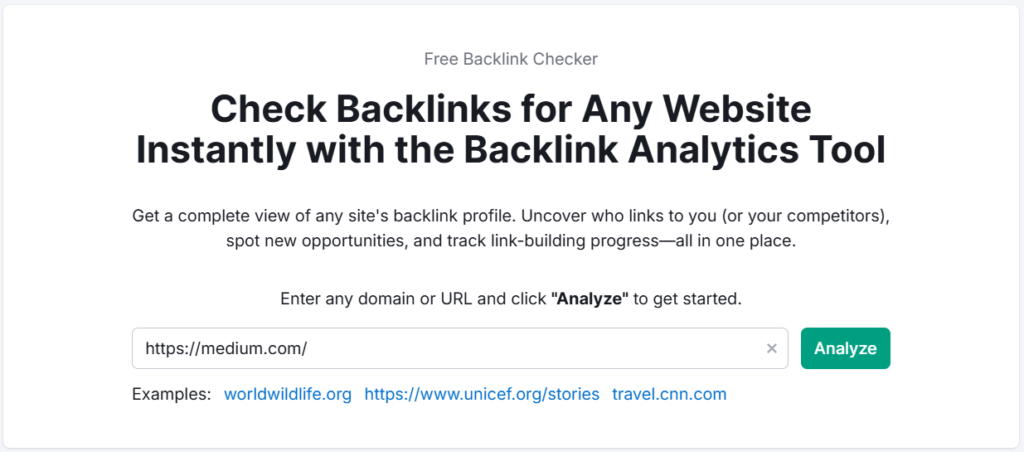
Backlinks still move rankings. The question is which backlinks to pursue — and that’s where SEMrush’s Backlink Analytics and Link Building Tool become genuinely useful.
Backlink Analytics lets you analyze any competitor’s backlink profile. You’re looking for:
- Sites that link to multiple competitors but not to you (Link Intersect feature)
- High-authority domains in your niche that actively link out to blog content
- Guest post patterns — if a site links to 3–4 blogs in your space, they likely accept guest content
Link Building Tool takes this a step further. Set it up with your target keywords and competitor domains, and SEMrush generates a prospect list automatically. You can manage outreach directly inside the tool — track who you’ve contacted, what the status is, and what links you’ve acquired.
One thing worth noting: this isn’t about chasing massive link counts. In my testing across multiple blog projects, five to ten genuinely relevant backlinks from sites in your niche will outperform fifty generic directory links every time.
Topic Research for Content Ideas That Actually Have Demand

If you’ve ever stared at a blank editorial calendar wondering what to write next, Topic Research solves that problem.
Enter your broad topic area — say, “email marketing for bloggers” — and the tool surfaces:
- Subtopics with traffic potential
- Popular headlines being used in top-ranking content
- Questions people are actually searching about that topic
- Related topics to build out your content cluster
What makes this useful beyond basic keyword research is the content cluster view. You can see how different subtopics relate to each other, which helps you plan a group of interconnected articles rather than standalone posts. Internal linking between related posts is one of the underrated levers for improving topical authority and spreading link equity across your blog.
Traffic Analytics — Understanding Where Your Competitors’ Readers Come From

This one’s a bit different, but it belongs in a serious blogger’s workflow.
Traffic Analytics lets you analyze any domain’s traffic sources — not just organic search. You can see roughly what percentage of a competitor’s traffic comes from search, social, direct, and referral sources.
Why does that matter for blog growth? Because it tells you where else your audience hangs out. If a competitor is getting significant referral traffic from a specific platform or publication, that’s a signal worth investigating — it might be a community, a newsletter, or a media outlet you should be engaging with.
This kind of intelligence is available through the Traffic & Market Toolkit.
What It Costs — Current Pricing
SEMrush offers two plan tracks depending on your needs.
SEO Classic Plans
These cover traditional SEO — keyword research, rank tracking, backlinks, site audit, and content tools.
| Plan | Monthly | Annual (billed monthly) |
|---|---|---|
| Pro | $139.95/mo | $117.33/mo |
| Guru | $249.95/mo | $208.33/mo |
| Business | $499.95/mo | $416.66/mo |
For most individual bloggers and content creators, Pro is the starting point. Guru becomes relevant when you need historical data, multi-location tracking, and content optimization tools — all of which matter for more competitive niches.
Pro and Guru both come with a 7-day free trial, so you can run the full workflow above before committing to anything. Start your free trial here.
Semrush SEO Free Trial ( Pro & Guru )
Get full Pro access for 7 days — keyword research, site audit, backlink analysis & competitor research. No charge until after the trial ends.
Start Your Semrush 7-Day Free Trial→Semrush One
Semrush One is the newer combined plan that integrates traditional SEO with AI visibility monitoring and GEO (generative engine optimization). It’s positioned for those who want to track how their brand and content appear not just in Google, but in AI-generated search results.
| Plan | Monthly | Annual (billed monthly) |
|---|---|---|
| Starter | $199/mo | $165.17/mo |
| Pro+ | $299/mo | $248.17/mo |
| Advanced | $549/mo | $455.67/mo |
Semrush One Starter and Pro+ include a 7-day free trial. Advanced requires a subscription or custom plan.
If your blog is in a niche where AI Overviews, ChatGPT citations, or Perplexity results are becoming traffic factors, Semrush One is worth looking at. The Starter plan monitors 1 domain for AI brand performance and tracks 50 prompts daily — a meaningful starting point for understanding your AI search presence.
For a detailed breakdown of how the classic plans compare, see Semrush Pro vs Guru.
Semrush One Free Trial
Everything you need to win AI visibility and drive SEO Success. Get full Semrush One access for 7 days — explore the Starter, Pro+, or Advanced plans. Track your website’s SEO performance, monitor AI visibility and brand share of voice, run deep site audits, and get AI-driven marketing insights. No charge until after your 7-day trial ends.
Start Your Semrush One 7-Day Free Trial →Add-Ons Worth Knowing About
- Additional Users — from $45/user/month (useful for team blogs)
- Lead Generation — $90/mo (for agency or freelance bloggers)
- Base Report — $10/mo (automated reporting pulling from 20+ SEMrush tools)
- Pro Report — $20/mo (adds white-labeling and AI-generated summaries)
The Workflow, Condensed
If you want a repeatable system rather than a one-time audit, here’s how I run it across blog projects:
- Monthly: Keyword Gap analysis against 2–3 competitors → identify new content opportunities
- Weekly: Position Tracking review → flag posts in positions 8–20 for optimization
- Monthly: Site Audit → clear errors before they accumulate
- Quarterly: Backlink outreach batch using Link Building Tool
- Ongoing: New posts built around Keyword Magic Tool research, always checking intent filters
The bloggers who grow fastest aren’t publishing the most content. They’re publishing smarter content and systematically improving what’s already live. SEMrush makes both sides of that equation a lot more manageable.
If you’re not already using it, grab the 7-day free trial and run through steps one and two above. The Keyword Gap result alone usually justifies the time spent.
Everything You Need About Semrush Free Trial
Activate your Semrush free trial directly, read our step-by-step guide on how to get it, or learn how to cancel before getting charged — all in one place.
Start Semrush Free Trial
Get full Pro access for 7 days — keyword research, site audit, backlink analysis & competitor research. No charge until after the trial ends.
Start Free Trial →How to Get Free Trial
Step-by-step guide to activate your Semrush free trial — what you unlock, how to use it right, and how to get maximum value in 7 days.
Read Full Guide →How to Cancel Trial
Don’t get charged by mistake. Step-by-step guide to cancel your Semrush trial before the billing date — timing tips included.
Read Cancel Guide →Semrush One Free Trial
Dominate the future of AI search. Unlock advanced brand share of voice, monitor generative AI visibility, automate insights, and scale marketing impact across all digital channels.
Semrush Pro & Guru Free Trial
Master your organic rankings. Run comprehensive site audits, track keyword positions, analyze backlink profiles, and spy on competitor SEO strategies completely risk-free for 7 days.
Frequently Asked Questions
How can I quickly grow my blog traffic with SEMrush as a beginner?
Start with two things: the Keyword Gap tool and Position Tracking. Keyword Gap shows you what your competitors rank for that you don’t — giving you a ready-made content roadmap. Position Tracking shows you which of your existing posts are close to ranking higher, so you know where to focus improvement efforts first. These two tools alone give most bloggers a clear, prioritized action plan without needing to master the entire platform.
Is SEMrush worth it for a small blog?
Honestly, it depends on your goals. If you’re publishing content seriously — even on a small blog — SEMrush helps you avoid wasted effort. Writing posts that have no search demand, targeting keywords too competitive for your domain, and missing easy wins your competitors are already ranking for — those are costly mistakes even for small blogs. The Pro plan at $117.33/mo billed annually covers keyword research, rank tracking, backlinks, and site audit. The 7-day free trial is a reasonable way to test whether the data pays for itself.
What SEMrush feature helps the most with blog traffic?
From experience across multiple blog projects, Position Tracking combined with Keyword Gap has the highest direct impact on traffic growth. Position Tracking identifies posts already gaining traction, and Keyword Gap fills the content gaps competitors have exposed. Site Audit is close behind — fixing technical issues on existing content often produces ranking improvements without writing a single new post.
Can I use SEMrush to find blog post ideas?
Yes. Topic Research is the dedicated tool for this — enter a broad topic, and it returns subtopics, popular headlines, related questions, and content cluster ideas. The Keyword Magic Tool’s “Questions” filter is also useful for finding exactly how people search for a topic. Both tools are available on all SEO Classic plans and Semrush One plans.
How does SEMrush help with keyword research for blogs?
The Keyword Magic Tool is the primary instrument. It lets you filter by keyword difficulty, search intent, question format, and SERP features. For blogs specifically, filtering by informational intent and keyword difficulty under 40 narrows the list to genuinely achievable targets. You can also check if a keyword triggers a Featured Snippet, which is worth prioritizing if you can structure your content to capture it. For more on using SEMrush’s keyword tools without a paid plan, see how to use SEMrush for free.
Does SEMrush help with content optimization?
Yes, through the SEO Writing Assistant and On-Page SEO Checker (available on Guru and above in SEO Classic, and on all Semrush One plans). These tools analyze your draft or published content against the top-ranking pages for your target keyword — suggesting readability improvements, missing semantic terms, and optimization gaps. It’s particularly useful when you’re targeting competitive keywords where content quality needs to match or exceed what’s already ranking.
How long does it take to see results using SEMrush for blog traffic?
Technical fixes from a Site Audit can produce ranking movement within a few weeks on content that was already close to ranking. Content improvements on posts in positions 8–20 (identified via Position Tracking) typically show results within 4–8 weeks, depending on how frequently Google crawls your site. New content targeting low-competition keywords can rank in 6–12 weeks for newer blogs, sometimes faster on established domains. SEMrush speeds up the process by removing the guesswork — you’re acting on data rather than intuition.
All Semrush Toolkits — Quick Overview
Semrush is not just one tool. It’s a complete platform of 8 specialized toolkits — each built for a specific marketing goal. Pick the one that fits your workflow, or go all-in with Semrush One.