Two tools. Both excellent. Both expensive. And if you’ve spent any time trying to pick between Semrush and Ahrefs, you know how frustratingly close they feel — until they don’t.
I’ve used both extensively across different client projects, and the honest answer is: they’re not really competitors in the way most comparison articles suggest. They overlap, sure — but they’re built around different philosophies, and that matters more than any feature checklist.
Semrush vs Ahrefs: Quick Answer
Semrush is the broader platform — better for agencies, content marketers, and anyone running multi-channel campaigns. Ahrefs is sharper for pure SEO work, especially backlink analysis and technical site auditing. If you can only afford one, your choice should come down to what you actually do daily, not which tool has more features on paper.
The Price Reality (No Sugarcoating)
Let’s get this out of the way first, because it shapes everything.
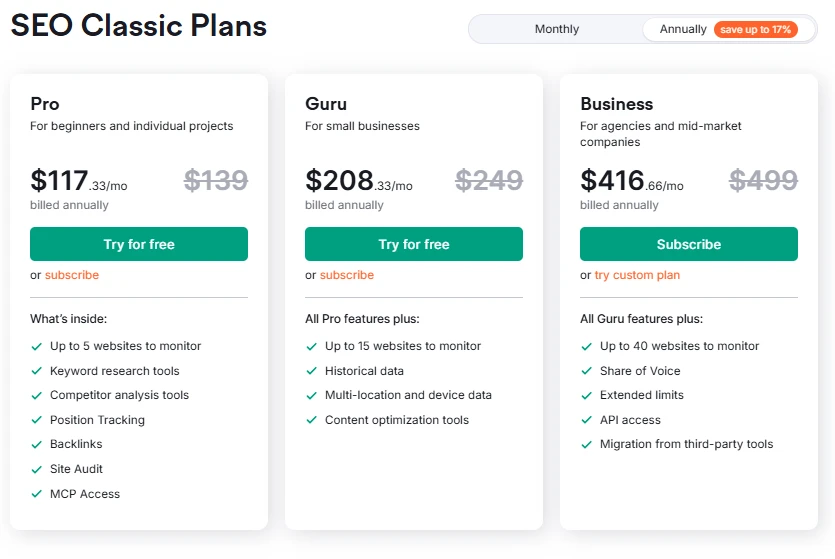
Semrush SEO Classic Plans (Monthly):
- Pro: $139.95/mo — up to 5 websites, 500 keywords to track
- Guru: $249.95/mo — up to 15 websites, 1,500 keywords, historical data
- Business: $499.95/mo — up to 40 websites, 5,000 keywords, API access
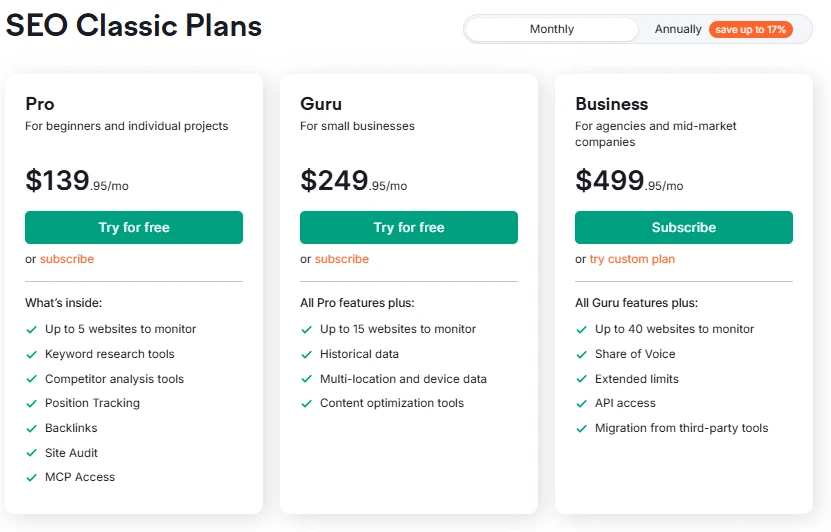
Pay annually and you save up to 17%:
- Pro drops to $117.33/mo
- Guru to $208.33/mo
- Business to $416.66/mo
Ahrefs Plans (Annual billing):
- Lite: $108/mo ($1,290/yr) — 5 projects, 750 tracked keywords, 6 months historical data
- Standard: $208/mo ($2,490/yr) — 20 projects, 2,000 keywords, 2 years of historical data
- Advanced: $374/mo ($4,490/yr) — 50 projects, 5,000 keywords, 5 years of historical data
- Enterprise: $1,499/mo — for Fortune 500-scale teams
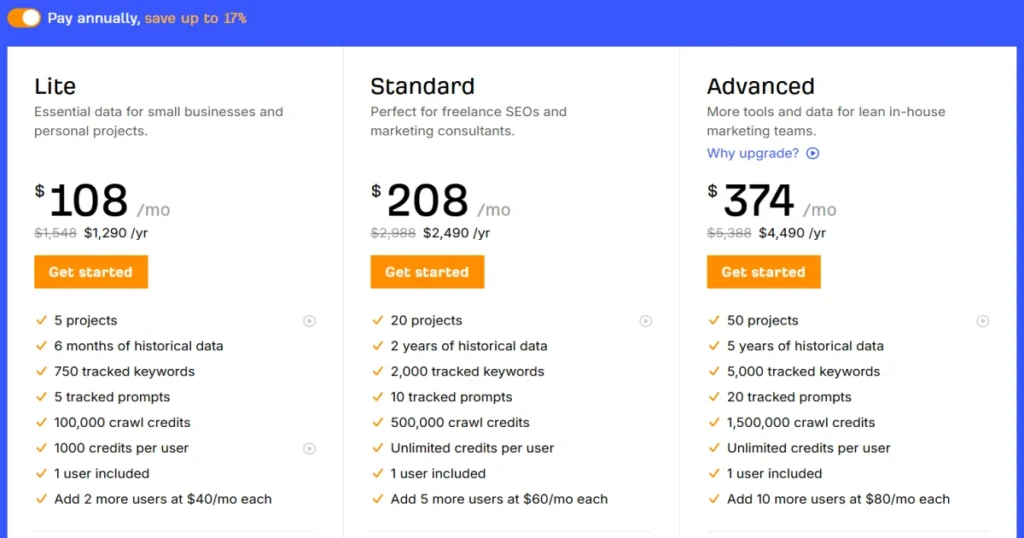
At the entry level, Ahrefs Lite ($108/mo) is noticeably cheaper than Semrush Pro ($117.33/mo on annual). But that gap disappears fast as you move up. The Standard Ahrefs plan ($208/mo) matches Semrush Guru almost exactly — which is either a coincidence or a deliberate positioning move.
One thing worth noting: Ahrefs no longer offers a free trial. Semrush still does — you can grab a free trial here before committing to anything.
What Semrush Actually Does Well
Semrush started as a keyword research and competitive intelligence tool, and that core is still its strongest suit. But it’s grown into something much wider.
In my testing across client accounts, Semrush’s Position Tracking is genuinely more granular than most people realize. On the Pro plan, you get 500 keywords with daily updates and mobile data. On Guru, that jumps to 1,500 keywords with multi-location and device tracking — which is useful if you’re managing local SEO across cities.
The Site Audit tool is solid. Pro users get 100,000 pages to crawl per month (20,000 per website), Guru bumps that to 300,000. It’s not quite as deep as Ahrefs’ crawler on technical signals, but it catches the things that actually affect rankings: broken links, redirect chains, Core Web Vitals issues, and JavaScript rendering problems (Guru and Business only).
Where Semrush genuinely pulls ahead is breadth. The platform includes:
- Content marketing toolkit (Guru+)
- Social media management
- Advertising research
- Local SEO tools
- PR monitoring
If you need all of that under one roof, Semrush makes economic sense. Replacing those tools individually would cost significantly more.
The Semrush SEO Toolkit covers keyword research, backlinks, site audit, and rank tracking in one place — which is where most people start.
Pro Observation: Semrush’s Keyword Cannibalization report (available from the Guru plan) is one of those features most people don’t use but should. I found it surfaced real cannibalisation issues on a content site that had been losing rankings for months. Ahrefs doesn’t have a direct equivalent built into rank tracking.
What Ahrefs Does Differently
Ahrefs built its reputation on backlink data, and that reputation is earned. Their crawler is the second-most active on the web — only Google’s bot crawls more. That translates into backlink index freshness that Semrush genuinely can’t match at the same price tier.
In practice: when I’m doing a fresh backlink audit for a client, I’ll check both tools. Ahrefs consistently surfaces links 2–4 weeks earlier than Semrush does. For competitive link analysis, that lag matters.
Keywords Explorer in Ahrefs is also excellent. The data includes search intent classification, keyword clusters, and AI suggestions (from the Standard plan up), which makes building topical clusters faster. Semrush does keyword clustering too, but Ahrefs’ implementation feels more integrated into the research workflow.
The Brand Radar AI feature is newer and interesting — it tracks brand mentions across 372M+ organic prompts from AI platforms. It’s not something Semrush has a direct equivalent to yet. Lite users get 5 tracked prompts, Standard gets 10. If AI visibility is part of your strategy (and increasingly it should be), this is worth paying attention to.
Ahrefs also includes a Social Media Manager (currently in beta, unlimited while in beta) across all paid plans — something that used to require a Semrush add-on.
One real limitation: Ahrefs doesn’t have Semrush’s advertising intelligence depth. If you run paid campaigns and want competitive ad research, Semrush wins that category clearly.
Plan-by-Plan: Who Should Buy What
| Semrush Pro ($117.33/mo) | Ahrefs Lite ($108/mo) | |
|---|---|---|
| Websites | 5 | 5 projects |
| Keyword tracking | 500 | 750 |
| Historical data | ✗ | 6 months |
| Backlink freshness | Good | Excellent |
| Content tools | ✗ | ✗ |
| Free trial | ✓ | ✗ |
At the entry tier, Ahrefs Lite is a better value for pure SEO work — more tracked keywords, historical data included, and stronger backlink intelligence. Semrush Pro makes sense if you need the free trial to evaluate before committing, or if you’re already using other Semrush tools.
| Semrush Guru ($208.33/mo) | Ahrefs Standard ($208/mo) | |
|---|---|---|
| Websites | 15 | 20 projects |
| Keyword tracking | 1,500 | 2,000 |
| Historical data | ✓ | 2 years |
| Content tools | ✓ | Add-on ($99/mo) |
| Looker Studio | ✓ | ✓ |
At the mid-tier, they’re essentially the same price. Ahrefs Standard gives you more projects and keywords, plus 2 years of historical data, vs Semrush Guru’s unspecified historical window. But Semrush Guru includes content optimization tools that Ahrefs charges separately for ($99/mo Content Kit add-on).
The Guru/Standard tier is where most independent SEOs and small agencies live. My recommendation here depends on your primary use case.
Add-Ons: Where Costs Sneak Up
Both platforms have add-on structures that can inflate your bill quickly.
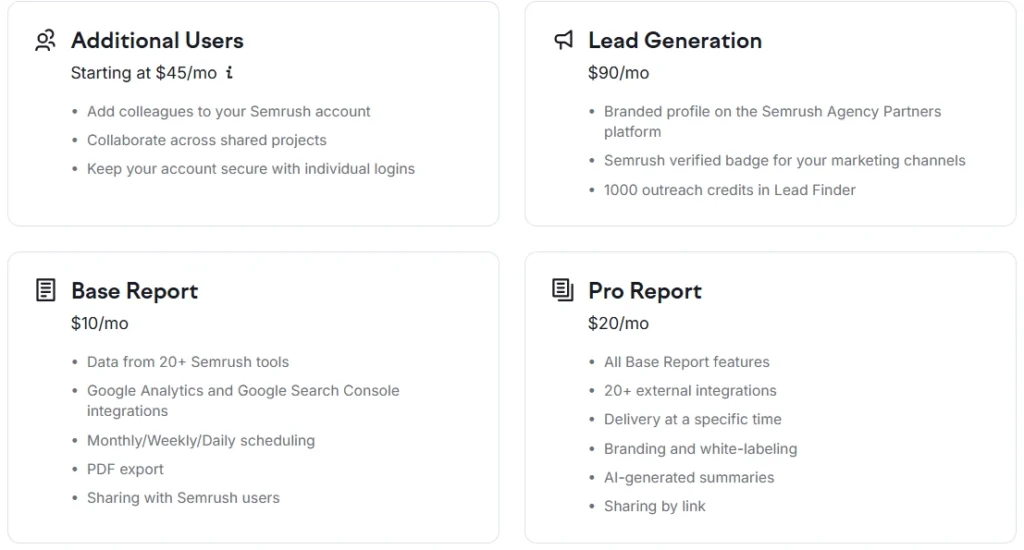
Semrush add-ons:
- Additional users: from $45/mo
- Lead Generation: $90/mo
- Base Report: $10/mo
- Pro Report: $20/mo
Ahrefs add-ons:
- Brand Radar AI: from $199/mo
- Content Kit: from $99/mo
- Report Builder: $99/mo
- Project Boost Pro: $20/mo per project
- Project Boost Max: $200/mo per project
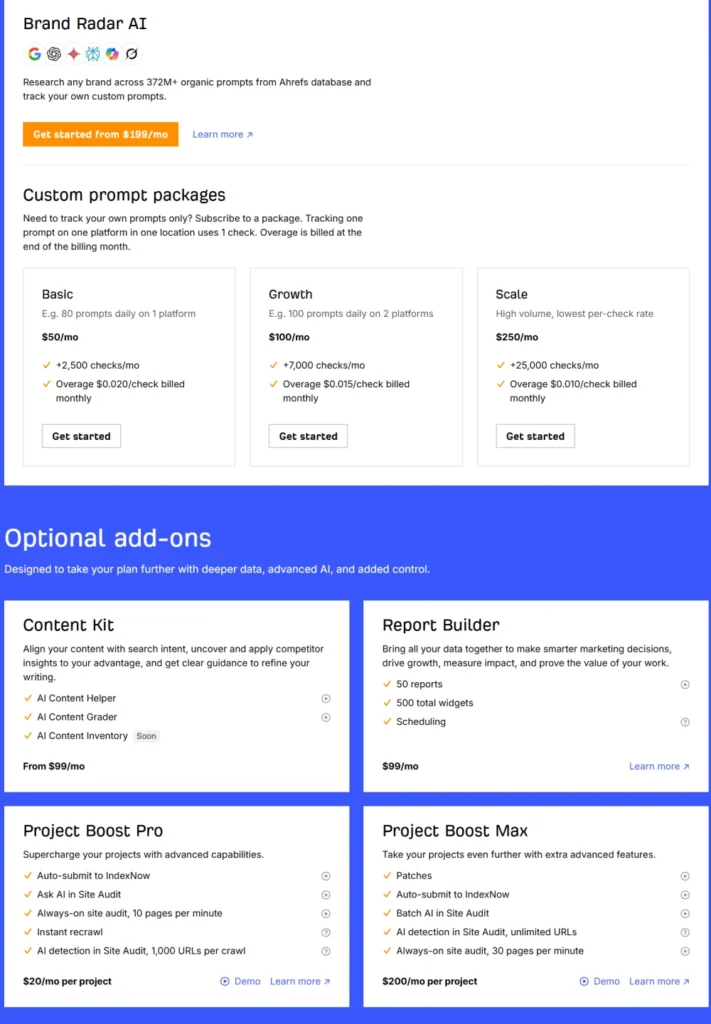
Ahrefs’ add-ons are pricier in isolation. If you need the Content Kit on Ahrefs Standard, you’re suddenly at $307/mo — vs Semrush Guru, which bundles content tools in the base price at $208.33/mo.
Where Each Tool Falls Short
Semrush weaknesses:
- Backlink data isn’t as fresh or as deep as Ahrefs
- The interface feels cluttered when you’re managing multiple projects — there’s a learning curve that never fully disappears
- Business plan needed for API access (Ahrefs includes API from Lite)
- Historical data locked behind the Guru plan
Ahrefs weaknesses:
- No free trial (Semrush still offers one)
- No advertising research tools at the same depth
- Content tools are a paid add-on, not bundled
- Keyword cannibalization tracking isn’t as developed
My Real Take After Using Both
Honestly, if I’m advising a solo SEO or a small agency doing primarily organic work, I’d lean toward Ahrefs Standard. The backlink data quality difference is real, the keyword limits are more generous, and the interface is cleaner for day-to-day research work.
If I’m advising a content team, a digital marketing agency managing paid + organic + social, or someone who needs a one-stop platform with reporting and client management, Semrush makes more sense. The breadth is genuinely useful, not just a feature list.
And if you’re not sure? Start with Semrush’s free trial — Ahrefs doesn’t offer one anymore, so it’s the lower-risk way to evaluate the category before spending $100+/mo.
Alternatives Worth Knowing
Neither tool feels right? A few others worth considering:
- SE Ranking — more affordable, solid for small teams: check it here
- Mangools — beginner-friendly, strong keyword research at a lower price point: see Mangools
- Ubersuggest — budget option for individuals just starting: Ubersuggest here
Best Semrush Alternatives to Consider
If Semrush’s pricing feels steep after the trial, these three tools cover most of what you need at a lower price point — SE Ranking, Mangools, and Ubersuggest all offer free trials too.
SE Ranking
More affordable entry pricing, solid rank tracking and audit features. Good for small agencies and freelancers who don’t need Semrush’s full data depth.
Try SE Ranking →Mangools
Beginner-friendly, clean UI, strong keyword and SERP tools at a much lower price point. Perfect for solo bloggers who need keyword research without the complexity.
Try Mangools →Ubersuggest
Neil Patel’s SEO Tool — keyword research, site audit, and competitor analysis at a very affordable price. Great for beginners and small business owners on a tight budget.
Try Ubersuggest →
Semrush SEO Free Trial
Get full Pro access for 7 days — keyword research, site audit, backlink analysis & competitor research. No charge until after the trial ends.
Start Your Semrush 7-Day Free Trial →Semrush vs Ahrefs: Frequently Asked Questions
Does Ahrefs offer a free trial?
No — Ahrefs removed its free trial a while back and hasn’t brought it back. You can test their tools via a limited free account (Ahrefs Free), but it doesn’t give you access to the full platform. If you want to properly evaluate an SEO tool before paying, Semrush is currently the only major option offering a real free trial.
Which tool is better for beginners — Semrush or Ahrefs?
Ahrefs has a cleaner interface that many beginners find easier to navigate for core tasks like keyword research and backlink checks. Semrush has more features, which can feel overwhelming at first, but its guided workflows and project setup make it approachable once you get past the initial learning curve. If you’re starting from zero, Semrush’s free trial gives you a no-risk way to find your footing.
Can I use Semrush and Ahrefs together?
A lot of serious SEOs do — and there’s a practical reason for it. Ahrefs is used primarily for backlink research and keyword discovery, while Semrush handles content tracking, reporting, and competitive advertising data. That said, running both simultaneously costs $300+/mo at minimum, so it only makes sense for agencies or consultants billing those costs to clients.
Is Semrush worth it for a one-person operation?
It depends on how you work. If you’re managing 2–3 sites and mostly doing keyword research and rank tracking, the Pro plan at $117.33/mo (annual) covers the basics. Where Semrush becomes harder to justify solo is when you’re paying for features — like social tools or content audits — that you’re not actively using. In that case, Ahrefs Lite at $108/mo might be a learner fit.
Which tool has better backlink data?
Ahrefs, and it’s not particularly close. Their crawler is the second-most active in the world after Google, and in practice, that means fresher, more comprehensive backlink data. Semrush’s backlink index has improved significantly over the years, but if backlink analysis is your primary use case, Ahrefs is the sharper tool for that specific job.
Does Ahrefs include content marketing tools?
Not in the base plans. Ahrefs offers a Content Kit as a paid add-on starting from $99/mo, which includes AI Content Helper, AI Content Grader, and AI Content Inventory. Semrush, by contrast, bundles content optimization tools into the Guru plan ($208.33/mo) without requiring a separate purchase, which makes it a better value if content workflow is a regular part of your process.
Is it hard to switch from one tool to another?
The data itself isn’t locked in — you’re not migrating anything between platforms. The real switching cost is the learning curve and workflow adjustment. Most SEOs find they can get comfortable with either tool within a few weeks. Ahrefs even lists “Migration from third-party tools” as a feature on its Business-equivalent plans, though in practice, both tools are self-contained enough that switching is more about habit than technical complexity.
Which is better for local SEO?
Semrush has the edge here. It offers a dedicated Local Toolkit with features like GBP management, local rank tracking, and citation building — things Ahrefs doesn’t cover at the same depth. If local search visibility is a core part of your strategy, Semrush is the more complete solution without needing third-party tools to fill the gaps.
The Bottom Line
Semrush and Ahrefs are both worth their price at the right tier for the right use case. The mistake most people make is buying the tool with more features instead of the tool that fits how they actually work.
Broader platform, multi-channel needs, or you want a free trial first → Semrush ( How to Get Semrush Free Trial )
Deeper SEO research, backlink focus, cleaner workflow → Ahrefs
Pick based on your workflow, not the feature comparison table.